
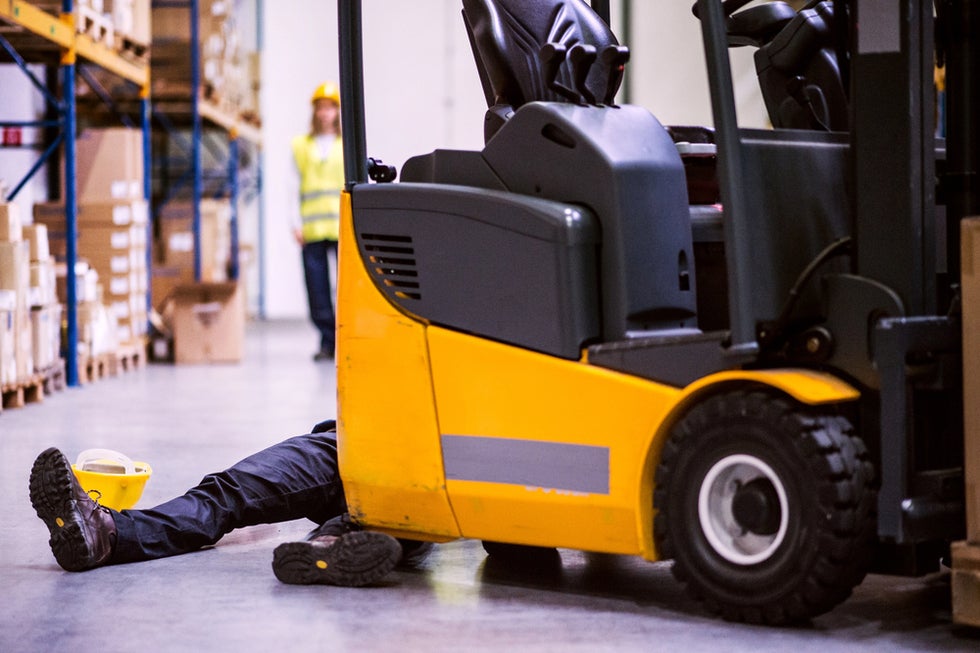
On July 3, 2025, a landmark settlement was reached in Santa Barbara, California: $30 million secured for Jonathan Brock, whose life was irreversibly altered when a forklift mast catastrophically collapsed on him because critical screws were missing. The accident left him with life-changing injuries, including paralysis, and highlights the importance of workplace safety, third-party liability, and thorough legal advocacy.
This case offers valuable lessons for anyone working in high-risk environments and for forklift accident attorneys handling complex workplace injury cases. Below, we break down the facts, legal context, and broader implications of this extraordinary settlement.
What Happened
Jonathan Brock was operating a special forklift when the mast suddenly fell onto him. This was not a random mishap. Investigators found that the screws essential to bolting the mast to its frame were absent. The lack of these critical components represented a severe safety failure.
The accident caused:
- Thoracic spinal injury leading to paraplegia
- Tachycardia
- Acute hyperglycemia
- Post-Traumatic Stress Disorder (PTSD)
- Significant emotional trauma
While Brock showed remarkable resilience by regaining the ability to walk short distances, his life was permanently altered. The injuries affected his independence, his ability to work, and his overall quality of life.
Why $30 Million? Breaking Down the Stakes
Extreme Physical Harm
Paraplegia drastically changes every aspect of a person's daily living. From mobility limitations to the need for lifelong medical care, the costs can be enormous. Medical equipment, home modifications, and ongoing rehabilitation add up to millions over a lifetime.
Emotional and Psychological Damage
The trauma of suddenly losing physical abilities combined with the fear and anxiety caused by a catastrophic accident can result in long-term psychological harm. PTSD, depression, and chronic pain often accompany severe spinal injuries.
Product Liability and Safety Failures
The missing screws pointed to a manufacturing defect or negligent maintenance. In California, strict product liability law allows injured parties to pursue damages from manufacturers or other responsible third parties without having to prove negligence.
Effective Legal Advocacy
This case was handled by an experienced trial attorney who presented compelling evidence, employed expert testimony, and documented both the physical and emotional consequences of the accident. Strong legal strategy was key to achieving such a high-value settlement.
Third-Party Liability in California Workplace Injuries
California's workers' compensation exclusivity rule generally prevents employees from suing their employers for workplace injuries. However, when a third party such as a manufacturer, contractor, or equipment servicing company is responsible, the injured worker can bring a civil lawsuit against that party.
In this case:
- The employer was shielded from a direct lawsuit under workers' comp laws.
- The forklift manufacturer or assembler was a third party whose defective product created liability.
- This allowed Brock's legal team to pursue damages far beyond what workers' comp could provide.
Identifying third-party liability is critical in cases involving defective machinery, tools, or equipment.
Legal Strategy and Settlement Considerations
Clear Evidence of Defect
Photographic evidence and expert inspection showed that the screws connecting the mast to the frame were absent. This eliminated ambiguity over the cause of the collapse and strengthened the plaintiff's position.
Comprehensive Damage Assessment
The legal team presented detailed calculations of future medical costs, home modifications, lost earning capacity, and non-economic damages such as pain and suffering. Life care planners and economic experts likely played a major role in valuing the claim.
Negotiation Leverage
With strong liability evidence and catastrophic damages, the plaintiff's legal team had significant leverage in negotiations. A potential jury verdict could have exceeded the settlement, motivating the defense to resolve the case before trial.
Public Disclosure
While many large settlements remain confidential, this case was made public. Announcing a $30 million settlement can serve as a deterrent to other negligent parties and highlight the dangers of inadequate equipment maintenance or manufacturing oversight.
Lessons for Attorneys and Injured Workers
For Attorneys
- Always investigate the possibility of third-party liability when handling a workplace injury.
- Meticulously document every element of the defect and its connection to the injury.
- Use both medical and non-medical experts to fully explain damages to insurers, opposing counsel, and juries.
For Injured Workers
- Workers' compensation may not be your only option. Other parties may also be legally responsible.
- Evidence is critical. Preserve equipment, photographs, and witness statements as soon as possible after the incident.
- Seek legal advice early to avoid losing valuable rights or evidence.
Why This Settlement Matters
This case underscores the dangers of industrial equipment failures and the massive financial exposure companies face when safety is compromised. It also demonstrates the importance of persistence, thorough investigation, and expert-driven litigation strategy in achieving fair compensation.
For California attorneys, it serves as a reminder that high-value recoveries are possible even in cases originating from workplace accidents when third-party liability exists. For workers, it reinforces that safety lapses, no matter how small, can have devastating consequences and should never be ignored.
The $30 Million Lesson: Accountability, Safety, and Justice in Workplace Injury Cases
This settlement is more than a number. It is a statement. It tells manufacturers, maintenance contractors, and all parties responsible for workplace equipment that safety failures will carry enormous consequences. It reinforces the legal principle that injured workers have the right to full and fair compensation when preventable defects cause life-changing harm.
For attorneys, it is a case study in how to strategically pursue maximum recovery in a workplace accident. For workers, it is a reminder that standing up for your rights can not only secure your future but also drive broader industry change.


Comments
There are no comments for this post. Be the first and Add your Comment below.
Leave a Comment